The median home price in Woodinville, WA is around $1,081,000, and homes are spending roughly 25 days on the market. One of the first surprises for buyers considering living in Woodinville, WA is how much the utility setup can vary from one property to the next - especially with water.
Denser neighborhoods plug straight into the municipal system. Move out toward the larger lots and the wooded edges of town, and private wells are just the norm. Knowing which you're dealing with - and what it'll cost you - matters before you're in contract.
Quick Answer: Comparing City and Well Water
Municipal water is straightforward: a utility treats the water, runs it through underground mains to your property line, and sends you a bill for what you use. All the testing, infrastructure, and maintenance on their end is their problem.
A private well is a different arrangement entirely. You're drawing groundwater directly from your own property, which means no monthly consumption bill - but the pump, the pressure tank, and every water quality test falls on you.
Which System is More Common in King County
Woodinville is served primarily by the Woodinville Water District, a municipal water corporation of King County. Portions of the area also fall under the Northshore Utility District and Cross Valley Water.
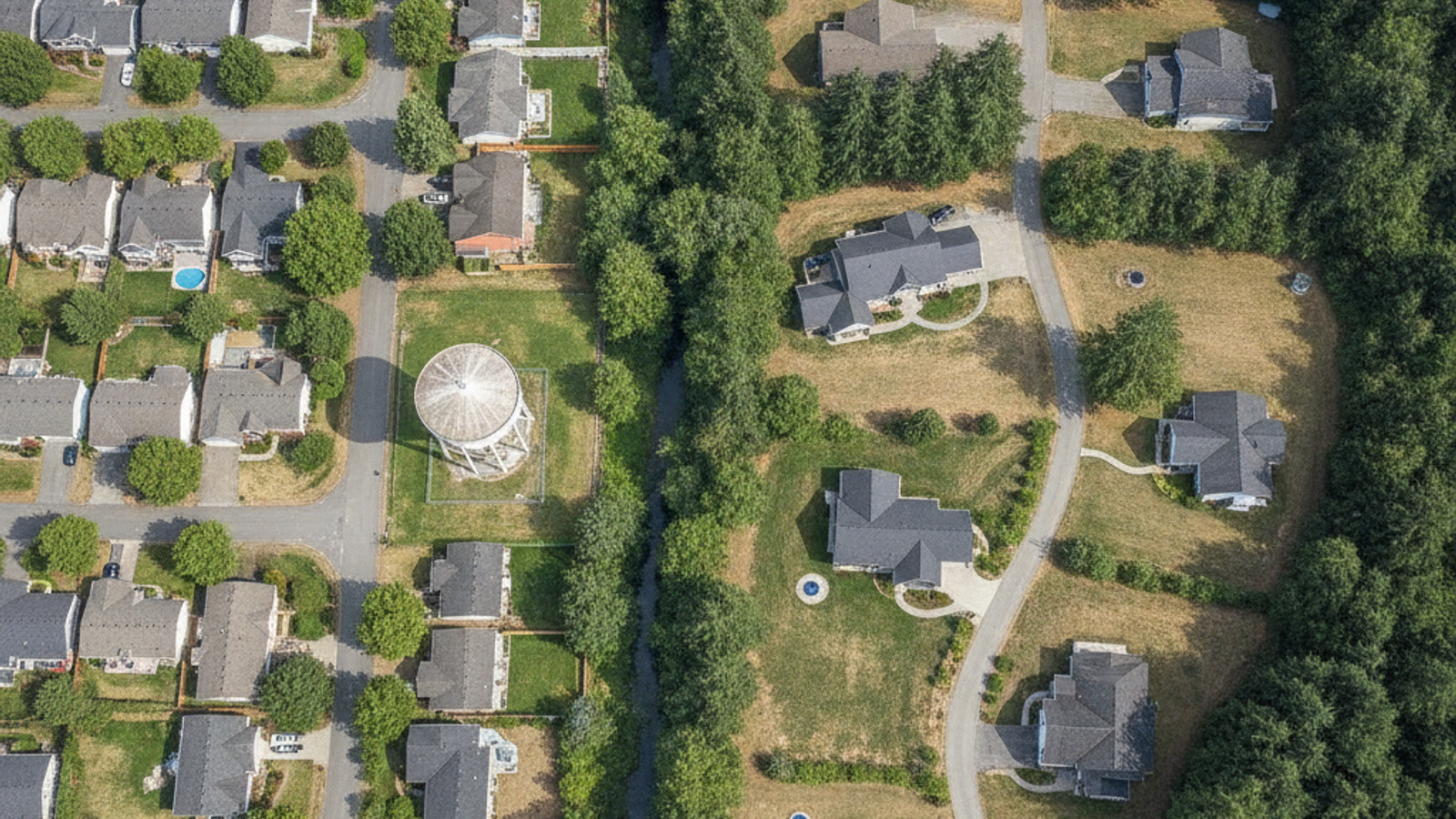
City water connections dominate the denser subdivisions near the town center. Push out toward the rural and wooded parts of the area, and private wells become standard.
Defining City Water and Private Wells
Municipal water comes from large-scale regional sources managed by public utility districts, treated to meet state and federal standards and delivered through a network of underground mains. You turn on the tap, it works, and you pay the bill.
Private wells are drilled, driven, bored, or dug into the earth to reach an underground aquifer. A mechanized pump brings the water up, and a pressure tank distributes it through the home's plumbing. Simple in concept, but entirely your responsibility to maintain.
Identifying Your Home's Water Source
The exterior of a property usually tells you pretty quickly. A municipal connection will have a water meter - typically in a concrete or plastic box near the street or sidewalk.
A well property will have a wellhead visible somewhere in the yard, usually capped. You'll also find a pressure tank inside the home, in the garage, the basement, or a dedicated pump house. If you see one, you've got a well.
Breaking Down Water Costs in Woodinville
The Woodinville Water District bills on a bi-monthly cycle based on meter size and usage. Under the 2022 rate schedule, a standard residential meter carries a fixed charge of $69.30 every two months, plus an $8.85 fire service charge.
On top of that base, consumption costs apply. Winter-level usage runs roughly $0.0079 per gallon - about $7.90 per 1,000 gallons. Use more than your winter average and that rate bumps up to approximately $8.64 per 1,000 gallons.
What Drives Up Your Monthly Bill
Irrigation is the biggest culprit. Watering a large lawn through a dry Woodinville summer will push you into those higher usage tiers fast.
Leaks are the sneaky version of the same problem - a running toilet or a slow drip in an irrigation line can drain hundreds of gallons a day without you noticing. The easiest check: watch your meter when nothing in the house is running.
Paying for Well Maintenance and Septic
Well owners don't get that bi-monthly consumption bill, but the savings come with strings. Running the pump adds a small amount to your electricity costs, and you'll have periodic out-of-pocket expenses for pump replacements and water testing.
One more thing to factor in: properties with private wells almost always have private septic systems too. No municipal sewer charge, but you'll need to budget for regular septic pumping and inspections.
Water Quality, Testing, and Health Standards
Public utility districts continuously monitor municipal water supplies, and the Woodinville Water District treats its water to meet all safety standards before it reaches your tap. That ongoing oversight is baked into what you're paying for.
Well owners are essentially running their own small water utility. Public Health - Seattle & King County recommends that private water system owners test for bacteria and nitrate at least once a year. That responsibility doesn't go away.
Treating and Softening Your Water
Groundwater from local aquifers often carries dissolved minerals - calcium and magnesium, mainly - that make water "hard." Hard water leaves scale on fixtures and shortens the life of water heaters.
A lot of well owners install water softeners or reverse osmosis filtration systems to deal with this. They work well, but they need upkeep: salt to add, filter cartridges to change. Factor that into your maintenance budget.
Pros and Cons of a Private Well
The case for a well is real: you're not subject to municipal rate increases, you don't pay consumption charges for watering your garden or filling a pool, and you have direct control over your own water supply.
The case against it is equally real. If your pump fails on a holiday weekend - and pumps don't check the calendar - you're calling a well service company on emergency rates, out of pocket, until it's fixed. Power outages cut your water off entirely unless you have a backup generator. That's the trade-off.
Connecting to the Municipal Water System
Converting from a private well to municipal water involves specific fees and permits. The Woodinville Water District charges Meter Setting Fees for new connections, which include a drop-in fee for the meter itself.
If a new service line needs to be run to the water main, a $2,000 full-set deposit is required upfront, with actual costs billed afterward. An Extended Service Agreement connection charge of $2,625 also applies when converting from temporary to permanent main service.
Can a Property Have Both Systems?
Some homeowners keep their well active for outdoor irrigation while using city water inside. It's a reasonable setup - you're not burning through municipal consumption charges every time you water the lawn.
Local regulations do prohibit cross-connections between the two systems, though. The well plumbing has to stay completely separate from the municipal supply lines. There's no workaround on that; it's a contamination issue for the public water system.
Buying a Home with a Well in the Current Market
With roughly 39 homes in Woodinville's active inventory right now, well properties are part of the mix - and buyers need to approach them differently. A standard home inspection won't cover the pump mechanics or the pressure tank.
Hire a specialized professional for a dedicated well inspection. King County Public Health requires a four-hour pump test proving at least 400 gallons of daily production for new wells. On an existing system, you should be asking for the same kind of flow-rate verification before you remove contingencies.
Frequently Asked Questions
Who are the primary utility providers for water, gas, and electricity in Woodinville, WA?
Woodinville is served primarily by the Woodinville Water District, with portions falling under the Northshore Utility District and Cross Valley Water. For natural gas and electricity, coverage varies by location - check the specific address, because it's not uniform across the area.
Which neighborhoods in Woodinville are connected to the city sewer versus relying on private septic systems?
Sewer access generally follows the municipal water lines in the denser areas closer to the town center. Properties on larger lots in the rural and wooded parts of the area typically rely on private septic systems.
How far in advance should I schedule utility transfers when buying and moving into a Woodinville home?
Contact utility providers at least two weeks before closing. That gives you enough lead time to make sure water, power, and other services are active on the day you take possession.
What are the typical setup fees and deposits required to open new residential utility accounts in Woodinville?
The Woodinville Water District requires a $2,000 deposit for full-set installations connecting a service line to the main. An Extended Service Agreement connection charge of $2,625 also applies when converting from temporary to permanent water main service.
How are final Woodinville Water District bills and utility balances handled during the escrow and closing process for sellers?
Escrow officers request a final estimated bill from the utility district before closing. The title company pays that balance directly from the seller's proceeds, so the new owner starts with a clean account.
Does the City of Woodinville manage garbage and recycling collection, or do homeowners need to set up private service?
Waste collection is handled by private waste management companies, not a municipal department. You'll need to set up your own account for weekly garbage and recycling pickup.
Check out this article next