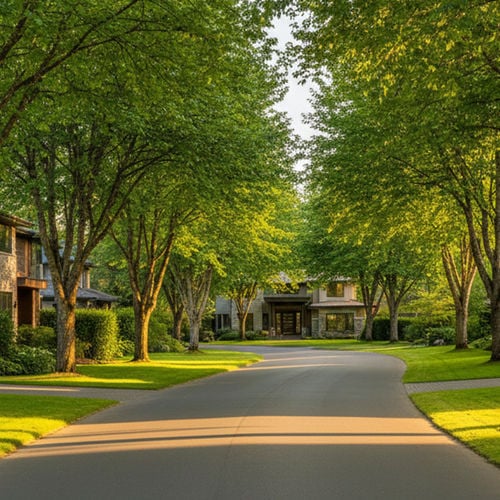
If you are thinking about moving to Woodinville, you likely already know the vibe. It’s that perfect blend of rural tranquility and upscale sophistication, sitting right on the edge of the Eastside’s tech hub. But moving here is a financial shift, especially if you are coming from a denser area like Seattle or Bellevue.
Woodinville is undeniably a premium destination. The cost of living here sits significantly higher than the national average—often 35% to 50% higher—and that gap is driven almost entirely by housing. However, the sticker shock tells a different story here than it does in neighboring cities. In Redmond or Kirkland, you are often paying for proximity to the office. In Woodinville, you are paying for acreage, privacy, and access to a semi-rural lifestyle that is hard to find this close to the city.
Let’s break down what it actually costs to live here in 2026, from the mortgage to the monthly utility bills.
Housing Costs: The Biggest Line Item
When we talk about the cost of living in Woodinville, we are mostly talking about real estate. The market here is distinct because the inventory is different. You aren't just buying a roof over your head; you are often buying land.
The Buying Market
Entering the Woodinville market requires a healthy budget. As of early 2026, the median home price generally hovers between $1,200,000 and $1,400,000. While interest rates have remained a hurdle for many, demand in Woodinville has stayed stable because there simply isn't much inventory. People who move here tend to stay.
If you are looking for homes for sale in Woodinville, keep in mind that "maintenance" means something different here. A significant portion of homes are on lots ranging from 0.5 to 5 acres. That means your housing budget needs to account for landscaping services or your own equipment (like a ride-on mower), which can add unexpected costs compared to owning a townhome in the city.
The Rental Market
The rental landscape here is much smaller than in Seattle. You won't find high-rise apartment blocks on every corner. Most rentals are concentrated in the "Schoolhouse District" downtown or are single-family homes rented out by private owners.
Because inventory is tight, prices are premium. You can expect average rents to land around $2,500 to $2,600 per month. If you are looking to rent a full-sized detached home, that number can easily climb higher depending on the square footage and lot size.
Property Taxes
Don't overlook the tax bill. While the property tax rate in this part of King County is standard for Washington (roughly 0.89% to 1.0% of assessed value), the high value of the homes creates a large annual expense. For a median-priced home, it is common to see property tax bills exceeding $10,000 or $12,000 per year. It is smart to factor this directly into your monthly payment calculations rather than treating it as an afterthought.
Utilities & Infrastructure Costs
Once you secure the house, you have to keep it running. Moving from an efficient apartment to a 3,000-square-foot home on a hill changes your utility profile significantly.
Electricity and Gas
We benefit from relatively reasonable rates thanks to regional hydro power, usually serviced by Puget Sound Energy (PSE). However, the sheer volume of space you need to heat impacts the bill. For a standard detached house, you might budget an average of $166 per month for electricity, but this fluctuates heavily with the seasons. Gas heating is common, and winter bills can spike during those damp, chilly months.
Water and Sewer: The Hidden Variable
This is where Woodinville gets tricky. If you are in the downtown area or suburban developments like Wellington, you are likely on public water and sewer through the Woodinville Water District. Rates here can be higher than Seattle, largely due to the infrastructure needed to serve spread-out properties.
However, many "Wine Country" homes in R-1 zones (one dwelling per acre) are on septic systems.
- The upside: You don't have a monthly sewer bill.
- The downside: You are responsible for septic maintenance, pumping, and eventual repairs, which can cost thousands if a system fails.
When you combine water, trash, electricity, and heating, a safe monthly budget for a single-family home is typically between $350 and $450.
Daily Living Expenses: Food, Transport, and Tax
Beyond the house, your day-to-day spending habits will likely shift. Woodinville is a car-dependent suburb, and that influences your wallet.
Transportation
Unless you live right in the downtown core, you will need a car to get almost anywhere. Gas prices in Washington are consistently among the highest in the country due to state taxes, often staying above $4.00 per gallon.
If you commute to Seattle, you also need to budget for the toll on the SR 520 floating bridge, which adds up if you are crossing daily. While there is a Park & Ride with bus service, public transit options are limited compared to the dense urban core.
Groceries vs. Dining
Grocery prices are standard for the Pacific Northwest. You have access to Haggen, Target, and a nearby Costco, so your weekly shop won't be much different than in Bellevue.
Dining out is a different story. Because Woodinville is a tourist hub for wine lovers, many local restaurants price their menus for the weekend crowd. "Winery dining" comes with a premium. However, there are plenty of casual spots in the town center that offer standard suburban pricing.
Sales Tax
Be prepared for the sales tax at the register. The combined sales tax rate in Woodinville is approximately 10.3%. This applies to almost everything you buy, including cars, furniture, and prepared food. It’s a significant factor if you are furnishing a new, larger home.
Comparison: Woodinville vs. Redmond vs. Bothell
If you are on the fence about where to land on the Eastside, it helps to compare the neighbors. Woodinville offers a specific lifestyle that differs greatly from Bothell or Redmond.
Woodinville vs Redmond vs Bothell
Median Home Price
- Woodinville: $1,200,000 – $1,400,000
- Redmond: Higher ($1.4M+)
- Bothell: Lower ($950K – $1.1M)
Primary Vibe
- Woodinville: Semi-rural, quiet, tourism-focused (wineries, open space)
- Redmond: Tech hub, more urban-suburban feel
- Bothell: Residential, denser, more walkable neighborhoods
Commute to Tech (e.g., Microsoft/Amazon hubs)
- Woodinville: 20–30 minutes
- Redmond: 5–10 minutes (often local)
- Bothell: 15–25 minutes
Best For
- Woodinville: Land, privacy, quieter lifestyle
- Redmond: Short commute, career convenience
- Bothell: Value for money, townhomes, balanced lifestyle
Bothell is generally the better option for value-seekers or those wanting a more walkable, dense neighborhood feel. Redmond commands the highest price per square foot due to its status as a tech headquarters, but you often get less land for your money. Woodinville sits in the middle price-wise but wins on lot size and atmosphere.
Quality of Life: What Do You Get for the Price?
So, why pay the premium? The return on investment in Woodinville isn't just in property appreciation; it's in lifestyle.
For many households, the primary draw is the Northshore School District. Access to these well-regarded schools is a major value driver that keeps property values stable even in slower markets.
Then there is the recreation. You are living in a town with over 100 wineries and breweries, yet you are minutes away from the Sammamish River Trail for cycling and running. The low-density zoning means less noise, less traffic congestion on side streets, and a crime rate that is statistically lower than major urban centers. You are paying for peace, quiet, and space—commodities that are becoming increasingly rare in King County.
Frequently Asked Questions
Is Woodinville expensive to live in?
Yes, Woodinville is considered an expensive area, with a cost of living roughly 35-50% higher than the national average. This is driven primarily by high housing costs, where median home prices often exceed $1,200,000, though you generally get more land here than in nearby tech hubs.
What is the average utility bill in Woodinville?
For a standard detached single-family home, you should budget between $350 and $450 per month for combined utilities (electricity, gas, water, and garbage). This can vary significantly depending on whether the home uses a septic system or public sewer, and how much heating is required in winter.
Is it cheaper to live in Bothell or Woodinville?
Bothell is generally cheaper than Woodinville. Bothell offers a wider variety of housing options, including more townhomes and smaller lots, which provides a lower entry price point for buyers compared to the acreage-heavy market of Woodinville.
Does Woodinville have a local income tax?
No, Woodinville does not have a local or state income tax, as Washington is one of the few states without one. However, residents pay for services through higher property taxes and a sales tax rate of approximately 10.3%.
Check out this article next